




A Feasibility Study of Transcranial Electric Stimulation Therapy (TEST) for Treatment Resistant Depression (TRD)
Dr. Regenold and his team at the National Institutes of Health (NIH) are leading a study to explore an investigational new, non-invasive brain stimulation technique to see if it can safely support people experiencing symptoms of depression.

An Investigation of the Antidepressant Effects of (2R,6R)-HNK, an Enhancer of Synaptic Glutamate Release, in Treatment-Resistant Depression
Researchers at the National Institute of Mental Health (NIMH) are studying an investigational drug, HNK, to see if it is effective in treating major depression. If you're 18–70 years old and have major depressive disorder (MDD), you may qualify for this 12- to 14-week inpatient research study.
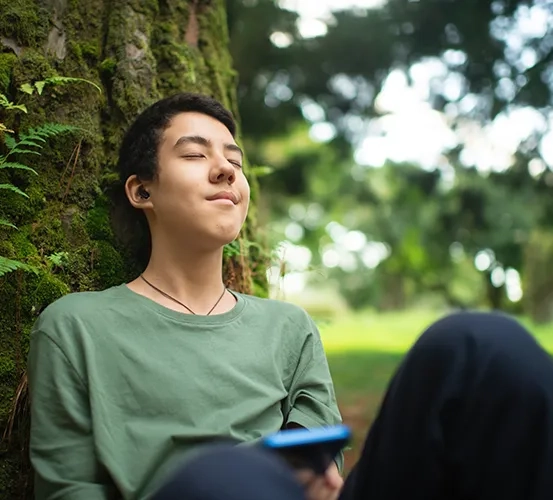
Role of GABAergic Transmission in Auditory Processing in Autism Spectrum Disorder
Researchers are studying the brain's response to language and sound. This study uses a repetitive transcranial magnetic stimulation (rTMS), an investigational form of brain stimulation, to measure how different parts of the brain communicate in teens with autism spectrum disorder (ASD). Findings from this study may aid in the development of possible future treatments.

Study of Systemic Lupus Erythematosus
The National Institutes of Health (NIH) is conducting a research study for patients with lupus. Doctors want to learn more about the disease and are looking for what causes it, how it progresses over time, and the genetic factors that might make a person more likely to develop it. This study is open to any individual, 10 years of age or older, who meets the American College of Rheumatology's criteria for having lupus, which include symptoms and abnormal blood tests.

Studies of the Natural History, Pathogenesis, and Outcome of Idiopathic Systemic Vasculitis
The National Institute of Arthritis and Musculoskeletal and Skin Diseases at the National Institutes of Health (NIH) in Bethesda, Maryland is conducting a study for vasculitis. Researchers are inviting both volunteers who have the condition, and those who do not, to participate in this study. All study-related tests and procedures are provided at no cost to you.
