



Content on this webpage is provided for historical information about the NIH Clinical Center. Content is not updated after the listed publication date and may include information about programs or activities that have since been discontinued.
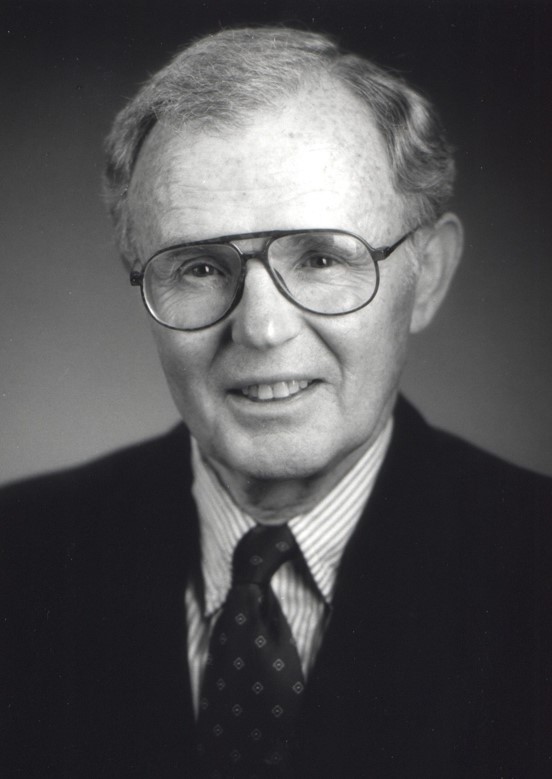
Dr. John Leo Doppman, 72, chief of the CC Diagnostic Radiology Department for 26 years, died of cancer on Aug. 21 at the Clinical Center.
A diagnostic and interventional radiologist here for 36 years. Dr. Doppman retired in April.
Dr. Doppman developed, refined, and performed numerous semi-surgical radiologic procedures.
He was a pioneer in angiography, a technique that uses injections of radio-opaque dye to visualize blood vessels and tumors. He researched vascular malformations of the spinal cord and developed ways to visualize and treat them. His research culminated in the publication of the first text on this subject in 1969. Later, he concentrated on endocrinology research and developed techniques for locating ectopic or elusive glandular tumors. Many of these techniques are now standard practice in medical centers worldwide.
“John was a pillar of the NIH clinical research community,” said Dr. John Gallin, Clinical Center director. “He was a respected clinician, prolific writer, dedicated teacher, and generous friend. He will be missed.”
Dr. Doppman received an MD from Yale and interned at Mercy Hospital, Springfield, Mass., served in the Navy from 1954 to 1957, and completed a residency in radiology at the Hospital of St. Raphael, New Haven, Conn. He was a Fullbright fellow in radiology research at the Postgraduate Medical School at Hammersmith Hospital, London, and the Karolinska Institute, Stockholm.
He joined the NIH Clinical Center in 1964 as deputy chief of the Diagnostic Radiology Department.
From 1970-1972 he was a radiology professor at the University of California, San Diego. When he returned to NIH, he was chief of the Clinical Center Diagnostic Radiology Department from 1972-1996. Under his direction the department acquired among the first CT and MRI scanners in the country.
“He was a keen, compassionate clinician, an enthusiastic teacher, and an innovative thinker,” said Dr. Andrew Dwyer, CC radiologist. “He was a strong, positive influence on the clinical, educational, and research environment of the Clinical Center.”
On Aug. 2, Dr. Doppman was awarded scientist emeritus status. Among his many honors were the Gold Medal from the Society of Cardiovascular and Interventional Radiology (1997); Gold Medal from the American Roentgen Ray Society (1998); the Copeland Award from M.D. Anderson Cancer Center (1992); and the Public Health Service Distinguished Service Medal (1982), the highest award granted by PHS.
He also received several NIH awards including the Distinguished Clinical Teacher Award (1997), the Clinical Center Director’s Award (1997), and the NIH Director’s Award(1999).
He was an honorary member of the radiological societies of England, Ireland, Germany, and Hungary, as well as of the American Society of Endocrine Surgeons. He authored 38 textbook chapters and 516 articles in scientific journals.
Survivors include his wife, Anne-Marie; a daughter, Corinna, a son, Christopher; and a granddaughter, Nicole.