



Umbilical Cord Blood Donation and Help Find a Cure for Sickle Cell Disease
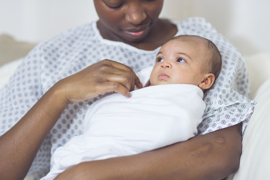

The blood from the umbilical cord and placenta are essential for investigating large number of blood-forming cells. The cells may be life-saving for someone who has sickle cell disease. A study at the National Heart, Lung, and Blood Institute (NHLBI) is looking for the best ways to collect, process and store umbilical cord blood from pregnant women.
Who Can Participate?
- Pregnant women between 18 to 45 years of age
- Women at risk of having an infant with sickle cell disease or women who are pregnant with no risk of having an infant with sickle cell
Study Details
- Provide informed consent
- Undergo screening using the Hematopoietic Progenitor Cell, Cord Blood Donor History
Questionnaire
- Receive the Duke Carolinas Cord Blood Bank (CCBB) collection kit, and provide the kit to your obstetrician prior to delivery
- Allow your cord blood to be collected from the umbilical cord and placenta after your baby is born, and have it processed, tested and stored at CCBB/STCL in Durham, NC
The NIH Clinical Center, America's Research Hospital is located in Bethesda, MD on the Metro red line (Medical Center stop).
For More Information
NIH Clinical Center Office of Patient Recruitment
800-411-1222
TTY users dial 7-1-1
Email: ccopr@nih.gov
Or go online
Refer to NIH study # 01-H-0122
Department of Health and Human Services
National Institutes of Health Clinical Center (CC)
National Heart, Lung and Blood Institute (NHLBI)