



What I do - David Lang, MD, MPH
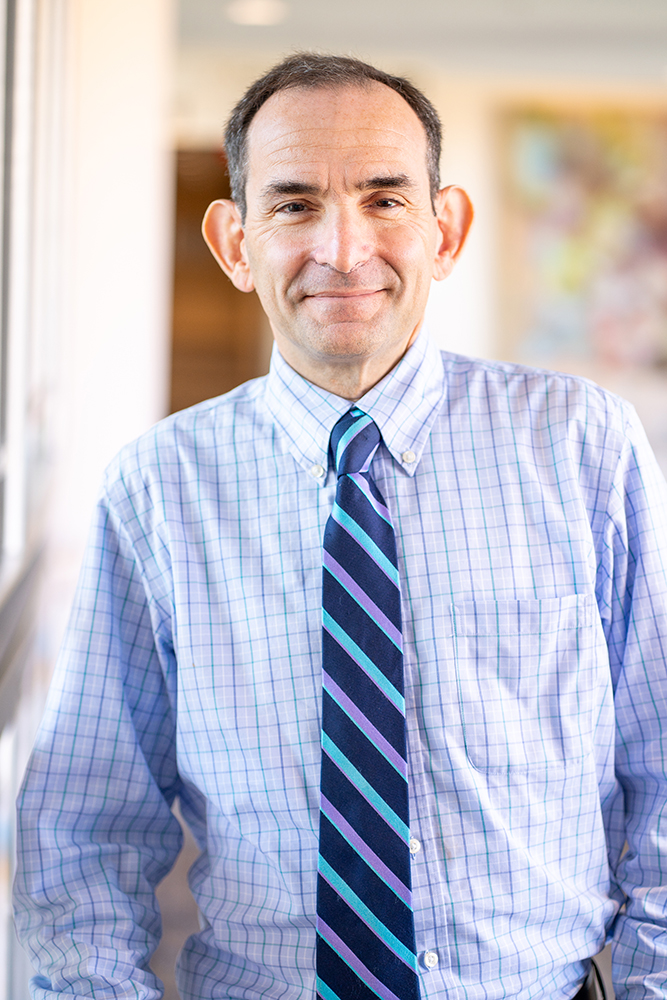
I’ve been at the Clinical Center for a long time, relatively speaking. I currently oversee patient safety and clinical quality and have since 2021. Before that, I was a pediatrician in the hospital’s pediatric consult service for 19 years; I was the general pediatrician for patients who came here to see the world’s experts in immunology or hematology, etc. The way I described my role to people outside of work, was “Well, I see children with unusual or uncommon conditions, and they call me for the common pediatric stuff.”
Today, I still introduce myself as a pediatrician. I don’t want to let go of that. However, my role now is to oversee patient safety and clinical quality at the Clinical Center and ensure that our patients get the best and safest possible care and that our systems and our processes are in place to ensure that.
The work has many facets. I could probably talk extemporaneously for two hours about that. But I think it starts with a culture of safety and people not being afraid to report concerns, ideally before they affect the patient. It’s also important to listen and take those concerns seriously.
One of the key things we talk about when talking about patient safety is the complexity in healthcare—in any healthcare setting, any hospital. Patients are vulnerable. Multiple staff are involved caring for them. In medicine, sometimes we don’t know what the patient has—we’re using our best education, our best tools, but we can’t be sure. Add to that the complexity of the work that happens here at the Clinical Center. We treat and study rare and refractory, or difficult to treat, diseases. Sometimes our investigators are identifying new diseases—there isn’t even a standard treatment. So that compounds the complexity.
The upshot is that I think we have to be even more focused on patient safety here at the Clinical Center, if possible, than other healthcare facilities, because there’s so much else that we can’t control and our patients are so vulnerable. Quality care is something that we owe our patients who entrust us. It affects the research and is crucial to robust science and good outcomes.
-Interview by Sean Markey
Interview condensed and edited for length and clarity.