



What I Do - Tracy Atteberry
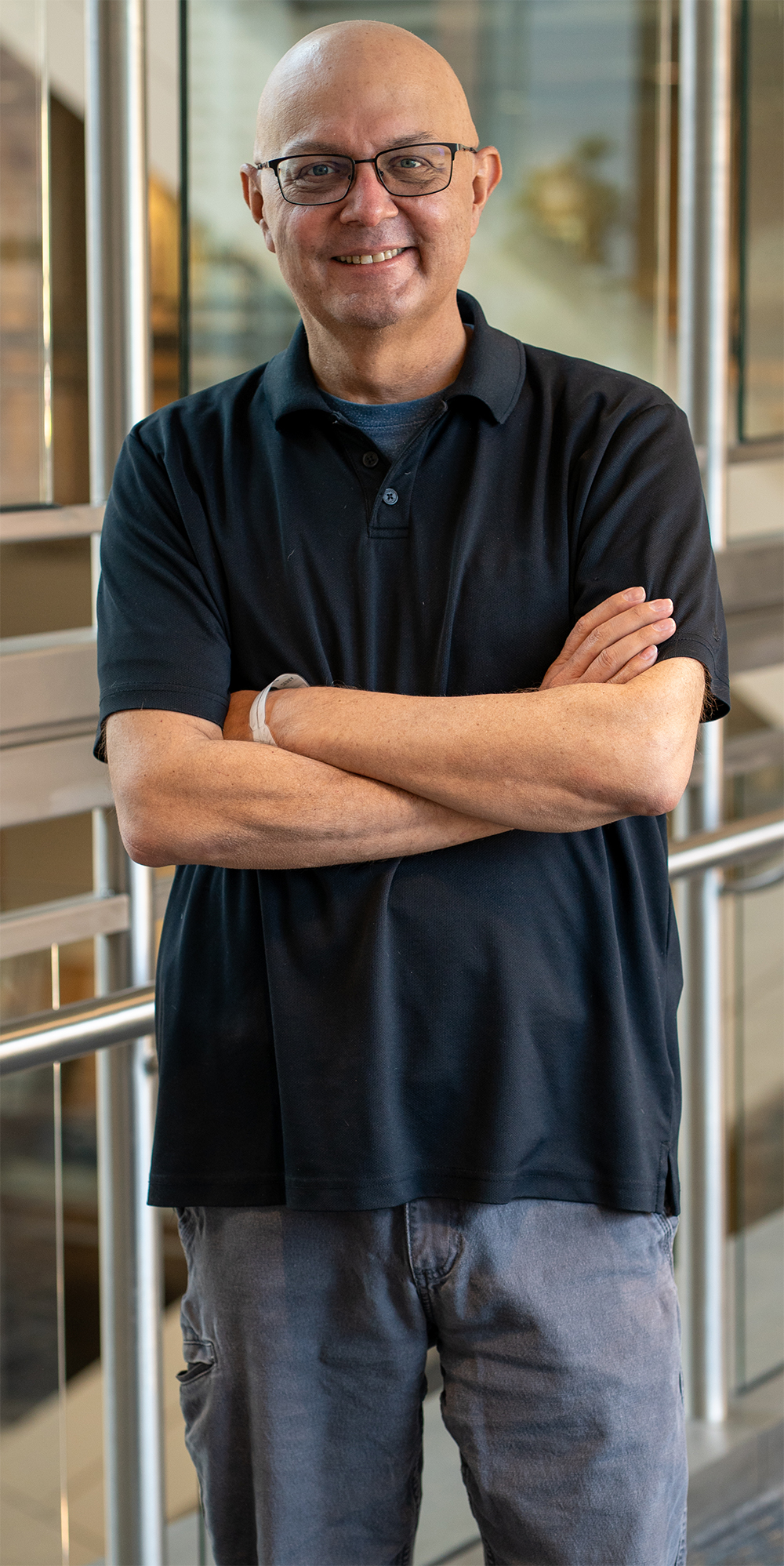
I’m a software developer in Lincoln, Neb. I was born with a rare genetic immune deficiency known as chronic granulomatous disease (CGD), which affects patients’ ability to defend against bacterial and fungal infections. In the 1950s and 60s, it used to be called fatal granulomatous disease of childhood because patients would rarely survive past age 10. I had a younger brother who died just before his third birthday of a massive infection.
Patients today are living longer. Having the correct diagnosis is really important, otherwise you don’t know to treat an infection aggressively. I’m 57 now. I was fortunate that I made it to age 14, when I was finally diagnosed. I’ve been coming to the NIH Clinical Center since 1982. Dr. John Gallin was my doctor. He later became the longest running director of the NIH Clinical Center. Dr. Harry Malech, chief of the Genetic Immunotherapy Section at the National Institute of Allergy and Infectious Diseases, has since taken up the mantle. His research continues to advance the field.
In January 2025, I began a gene therapy protocol developed by Prime Medicine, which is intended to essentially cure my disease. My blood cells were collected and refined into stem cells, which were then genetically corrected and propagated in the lab for 90 days. I returned to the Clinical Center in May and spent a month on the third-floor transplant unit to do the gene therapy: chemotherapy and an IV infusion followed by recovery. I was released in June.
Rare diseases like mine are often a very good place to test out new technology. The techniques developed can be applicable to a lot of other things and the research often yields a lot of unexpected results and broader applications. The unique thing about Prime Medicine’s gene-editing technology is the precision. It doesn’t make any off-target cuts. It is like a sniper rifle as opposed to a shotgun.
I’m only the second person in the world to receive this gene therapy. To date, my immune response and lab results have been excellent. I return to the Clinical Center regularly to make sure my numbers are stable. There’s an abundance of caution and being “cured” is a long process. A significant moment, however, occurred at my six-month follow-up in December. At this visit all of my phrophylactic medications for CGD were discontinued and some general restrictions lessened. I’ve taken those meds for 40-plus years, and suddenly I’m taking 10 fewer pills a day.
When you have CGD, you have to stay away from bacterial and fungal sources so there are many restrictions. There’s no living in the basement. No doing yard work or gardening or swimming in a bayou or cave exploring. There’s no scuba diving or live Christmas trees or house plants. No petting iguanas. Now that those restrictions are lessened a bit, I plan on getting a houseplant. If I’m feeling particularly daring, maybe I’ll dash into Trader Joe’s without wearing a mask. Just for the daredevil feel of it.
-Interview by Sean Markey. Photo by Justin Baker. Interview condensed and edited for length and clarity.
To join a study at NIH, contact the NIH Clinical Center Office of Patient Recruitment at ccopr@nih.gov or 1-800-366-5165.