



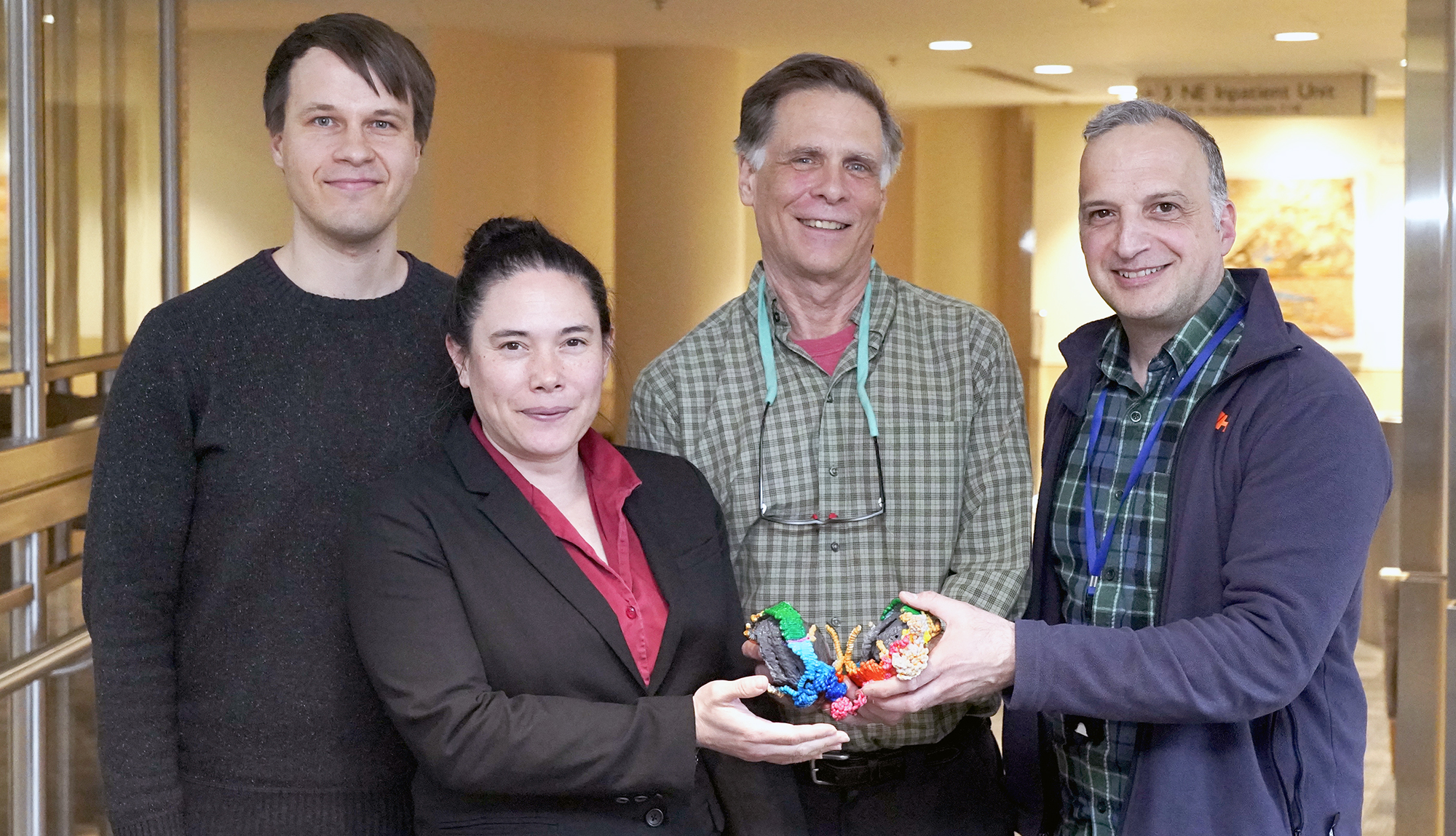
Recently, scientists at the NIH Clinical Center announced a breakthrough discovery on the structure of LDL (bad) cholesterol and how it binds with the LDL receptor molecule. Their findings, published in the journal Nature, have profound implications for our understanding of how the body processes cholesterol, paving the way for new and more targeted treatments to the disease. “Now that we know how the LDL receptor binds to the LDL, we can potentially design new drugs to lower the cholesterol levels in our blood,” says study co-author Mart Reimund, a post-doctorate fellow at the National Heart, Lung, and Blood Institute (NHLBI).
High cholesterol can cause heart disease, one of the leading causes of death in the United States. “This is the number one killer of humans on the planet. It’s an incredibly common chronic disease and is areal problem for all Americans,” says Altaira D. Dearborn, a study co-author and staff scientist at the National Institute for Allergy and Infectious Diseases (NIAID).
Researchers have tried to understand the processes that cause high cholesterol since 1951, looking to improve public health. Substantial gains were made when advances in electron microscope technology in the 1980s literally changed the way that scientists could see how proteins functioned in our body. Cryo-electron microscopy in particular enabled researchers to determine the three-dimensional structure of biological molecules, especially proteins, by flash-freezing them in a thin layer of vitrified ice at extremely low temperatures. One shortcoming with that process is known as sample drift, a phenomenon that can obscure the image.
However, recent advances in imaging technologies have enabled scientists to take this process to a new level. This enabled NIH researchers to create a full 3D map of how LDL binds to its receptor for the very first time.
“We have known for a long time that the binding of LDL to its receptor is a critical determinant of the level of LDL in the blood, a main driver of atherosclerosis (the buildup of fats, cholesterol and other substances on artery walls), but we didn’t know any molecular details of this process,” Alan T. Remaley, a study team member and senior investigator at NHLBI notes.
A key advance in cryo-electron microscopy is the ability to process a series of frames rather than a single snapshot, like a camera, to render cleaner images. This process generates a tremendous amount of information.
To understand the structure of LDL and how it bound to its receptor, the study team used special cloud computing to process the large data set used. Dearborn says this enabled the group to generate an image of something almost unfathomably small. The team also needed to design something artificial that binds to a specific spot as a type of registration, enabling them to orient and align the millions of LDL particles they imaged.
When healthy, our bodies use LDL receptors to remove “bad cholesterol” from our blood. This prevents it from being deposited in coronary blood vessels, where it causes atherosclerosis. If the LDL particles are too small, LDL doesn’t bind to the receptor and will stay in circulation longer leading to more atherosclerosis.
The team’s findings better explain why this occurs and could potentially be harnessed to create new, or more targeted, ways to lower LDL. Current medications such as statins primarily work by blocking the synthesis of cholesterol in the liver, which results in a compensatory increase in LDL receptors which go on to remove LDL from the blood.
“The structure of LDL bound to its receptor will be useful for designing potential future therapies to help combat the disease,” says co-author Joe Marcotrigiano, senior investigator at NIAID.
“Finally knowing the structure of LDL is an important step in our long-term fight against heart disease and will undoubtedly lead to many future breakthroughs,” Remaley adds.
The researchers provide more insight about their breakthrough in this video.
The findings published in Nature detail how they mapped out the Apolipoprotein B-100 for the first time and provide more information about the molecule itself: PDB-101: Molecule of the Month: Apolipoprotein B-100 and LDL Receptor.
-Dan Silbur